
Lake Rotomanu will be drained this week as scientists move to understand the full extent of a freshwater gold clam invasion in one of New Plymouth’s most popular lakes.
The invasive clam Corbicula fluminea, also known as freshwater gold clam, was confirmed in Lake Rotomanu on 8 November – the first time it has been found in New Zealand outside the Waikato River, where it was first detected in 2023.
The lake’s outlet is due to be opened on Thursday 11 December. Taranaki Regional Council (TRC) expects it will take around four days for the 10-hectare lake to empty. During that period, fish will be harvested in partnership with local hapū Ngāti Te Whiti, with as many as possible to be used.
TRC leads the newly formed Regional Corbicula Coordination Group, which brings together New Plymouth District Council, Ngāti Te Whiti, Biosecurity New Zealand, Fish & Game, Earth Sciences NZ and other partners. Their immediate goal is to work out how widespread the clams are in the lake and what, if anything, can be done about them.
The regional council’s Environment Services Manager Steve Ellis says the group first had to be sure that draining the lake would not spread the pests into the Waiwhakaiho River, which feeds and drains Lake Rotomanu before flowing a short distance out to the Tasman Sea.
“Over the last few weeks we’ve carried out testing and obtained advice on the salinity and flow of the river. We are confident any clams or larvae will be quickly washed the short distance out to sea,” Mr Ellis says. “Given that assurance the RCCG has asked lake owners NPDC to now empty the lake so we can get a good look at exactly what we are dealing with.”
Once the lakebed is exposed, a specialist team from Earth Sciences NZ will complete a detailed survey, mapping where the clams are, how deep they’ve burrowed and how old they appear to be. That information will be used to decide whether an eradication attempt is even possible, what methods might work and how much they could cost.
Mr Ellis says the price tag for any treatment is likely to be significant and there is currently no clear plan for who would pay.
“To be clear, there is no guarantee we will attempt to treat or eliminate the clams, even if it is technically feasible,” he says. “We all want the best for the region and we’re all aware of the massive economic damage these clams can do, so we’re having those conversations as a matter of urgency. In the meantime, we’re looking forward to seeing what the lakebed survey uncovers.”
Freshwater gold clams are considered one of the world’s most invasive freshwater species. Overseas, they reproduce rapidly, clog pipes and irrigation intakes, alter water chemistry and compete with native species. They have already raised major concerns for hydro power, water supply and river health in the Waikato.
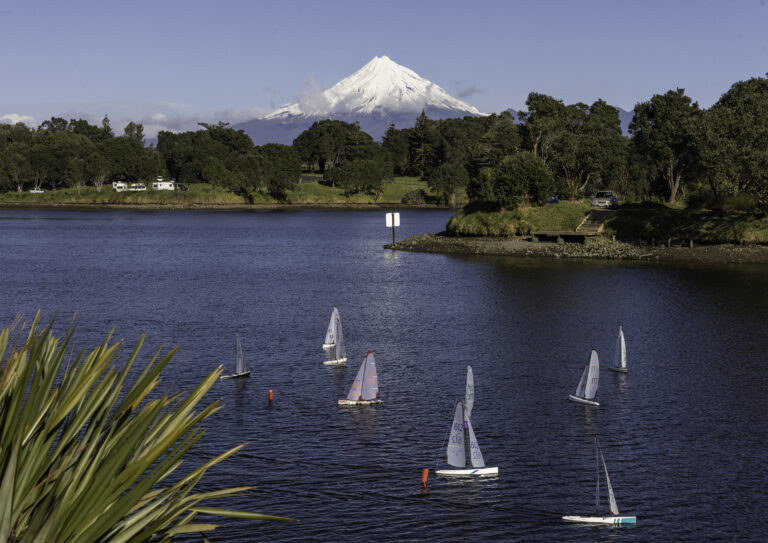
The decision to leave Lake Rotomanu empty for the summer was not taken lightly. The man-made lake off Clemow Road is a well-used spot for jetskiing, waterskiing, boating, kayaking, walking, picnics and freedom camping.
“We know it’s a popular summer spot and that locals and visitors will be disappointed, but we hope they understand the reasons for it,” Mr Ellis says. “The invasive clam Corbicula is a massive threat to our infrastructure, economy, ecosystems and recreational use of all the region’s waterways, so we need to act now to give ourselves the best chance of preventing long-term damage or recreational restrictions.”
Surveillance so far has not found freshwater gold clams in other key Taranaki waterbodies. Testing at Lakes Rotokare, Ratapiko and Rotorangi, as well as the Waiwhakaiho River, has come back clear, including eDNA tests that can detect traces of the species in water samples. However, authorities warn that absence of evidence is not proof the pest is not present.
Boaties, jet skiers, kayakers and other water users across the region are being urged to be extra vigilant this summer to avoid unknowingly spreading clams or other freshwater pests. Juvenile gold clams produce an invisible sticky mucus thread that can cling to boat hulls, trailers, fishing gear and lifejackets, making it easy for them to hitch a ride between lakes and rivers.
Authorities are again emphasising the Check, Clean, Dry message: check all gear for visible plant material or pests, clean it thoroughly with hot water or an appropriate decontamination product, and dry it completely before using it in another waterway. If possible, wake boats should be kept to a single lake rather than moved around the region.
Biosecurity New Zealand is sending a washdown trailer to Taranaki, which will be set up at popular lakes over summer so people can clean boats and equipment on site. Two dedicated Check, Clean, Dry ambassadors will help run the trailer and talk with lake users, backed by new signage, club visits and a social media campaign to get the message out.