
Skip to the video, or continue reading the story below:
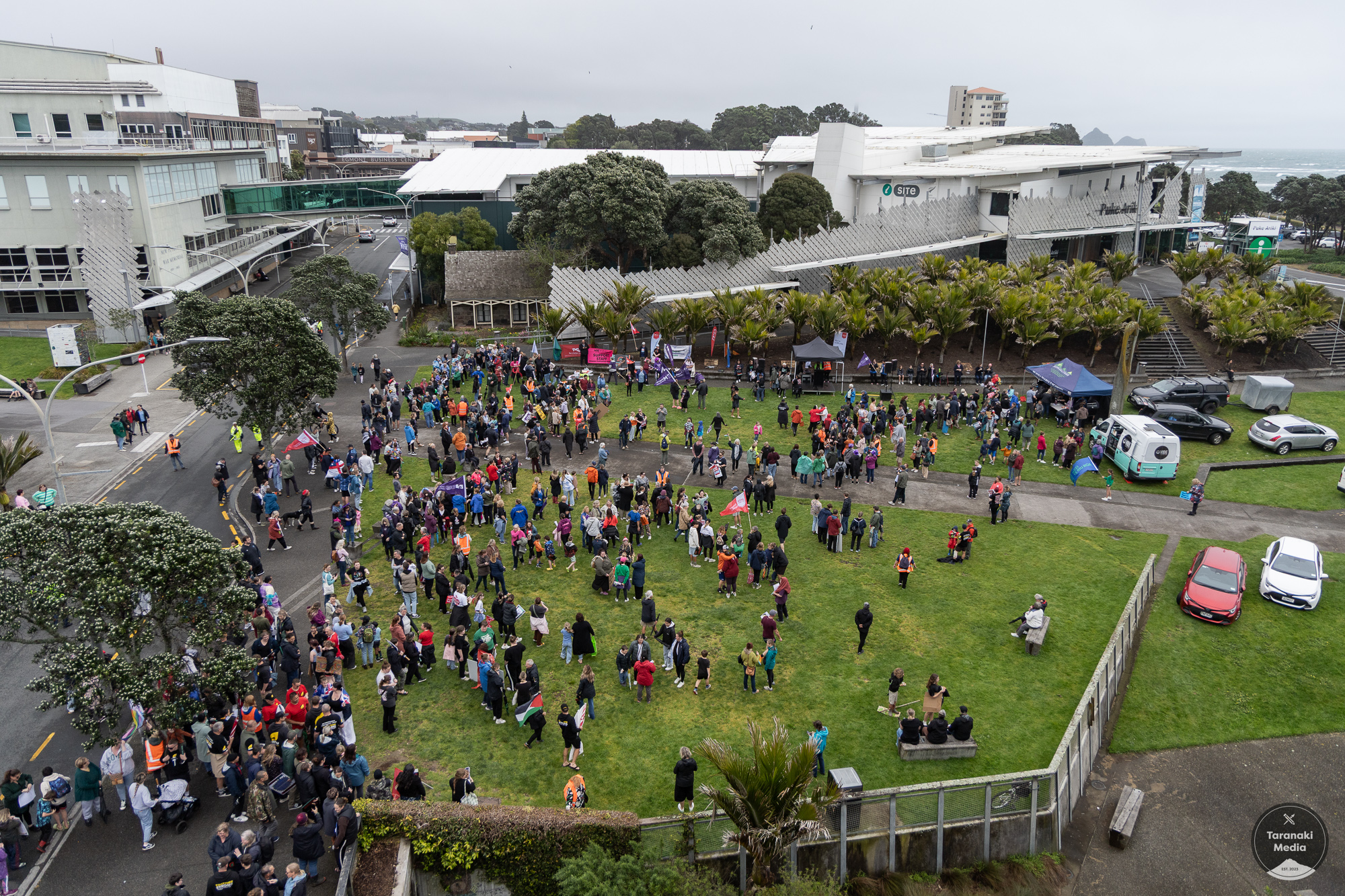
In a strong show of public-sector solidarity, hundreds of workers and supporters gathered at the Puke Ariki Landing in central New Plymouth to join the nationwide “mega strike” of healthcare, education and community-services staff.
The turnout contrasted with other regions where wild weather forced cancellations or indoor relocations of rally plans.
A free sausage sizzle and coffee cart kept spirits high while speakers from unions and community groups addressed the crowd ahead of the walk.

Chris Stuart, lead organiser for the Public Service Association (PSA), said: “Our members are on strike because they cannot keep delivering the care patients need or deserve while they are so overworked and undervalued.”
He described the turnout as “an amazing show of solidarity.”
Despite windy conditions and looming rain, the skies held, and the convoy of protesters marched through the New Plymouth CBD with support from Police, Māori Wardens and a traffic management company.
Traffic was backed up, but most were tooting and yelling in support while waiting patiently.

The bulk of the strike involves more than 100,000 public-sector workers across the country, including teachers, nurses and support services staff.
At issue are pay offers as low as 2% annually in the face of inflation higher than that, rising living costs and claims of unsafe staffing levels and eroding working conditions.

The National Government was quick to push back. In a press release issued Wednesday, Judith Collins, Minister for the Public Service, described the strike as “unfair, unproductive and unnecessary.”
She added: “The strike will not help anyone. It is a stunt targeting the Government, but the people paying the price are the thousands of patients who have had appointments and surgeries cancelled, and the hundreds of thousands of kids who will miss another day at school.”

While disruption has been felt across the health and education sectors, attendees in New Plymouth emphasised that the message was more than protest – it was a call for investment in core public services.