
New Plymouth’s new mayor, Max Brough, may have played the Grinch in the city’s Christmas parade, but he is signalling he would like to bring some midwinter sparkle back to the CBD with a possible return of the Winter Festival of Lights in 2027.
The self-styled cost-cutter, elected in October on a platform of tightening council spending and capping rates, has indicated his new council is open to reviving the event if it can be delivered within stricter budgets and under looming central government rules to limit rate rises.
The winter festival was created only a few years ago as a spin-off from the long-running TSB Festival of Lights in Pukekura Park.
When Covid-19 disruptions forced the cancellation of a summer season, NPDC’s events team looked for a way to keep the magic alive and support city businesses during the quietest part of the year.

That thinking led to a free Winter Festival of Lights Pop-Up in New Plymouth’s CBD, timed to coincide with Puanga and the Matariki public holiday. It was designed as a compact, four-night version of the park-based summer show.
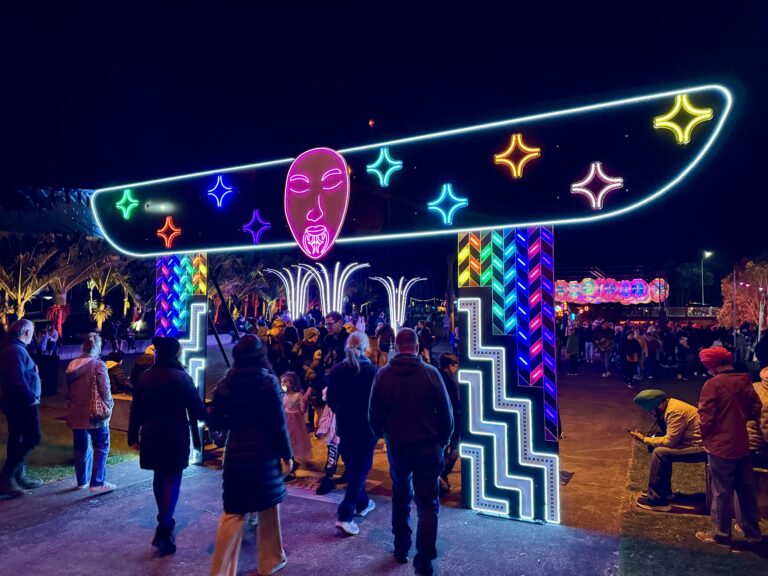
The inaugural winter event in 2022 turned central New Plymouth into a night-time trail of light installations stretching from Huatoki Plaza to the Coastal Walkway, drawing more than 15,000 people and earning high satisfaction scores in council surveys.
It returned in July 2023 for another four nights, again wrapped around the Matariki long weekend and mixing large-scale light sculptures, live music, food and family-friendly entertainment.
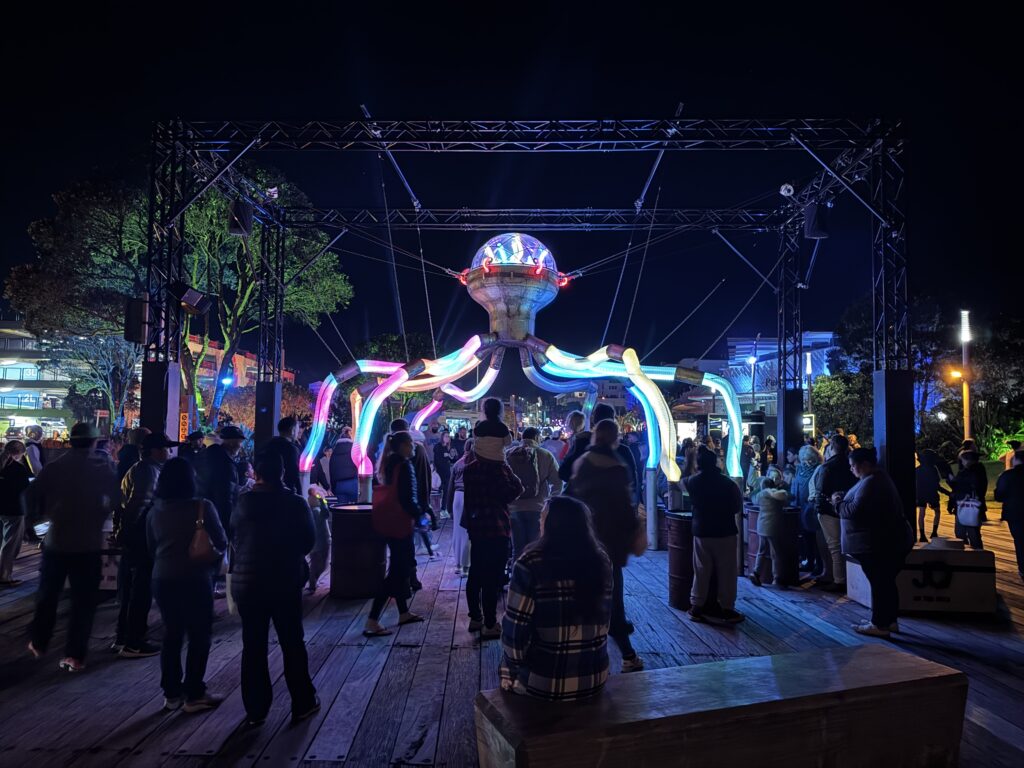
In 2024 the festival shifted slightly earlier to 27–30 June with nine new light works including the interactive Octopoda installation and a line-up ranging from kapa haka and fire poi to blues, country and electronica, all aimed at celebrating Puanga/Matariki and drawing people into the city centre on winter nights.
The 2025 edition, billed as the fourth season, ran 19–22 June and expanded to 12 installations, including Elysian Arcs by Australian collective Atelier Sisu, fresh from Sydney’s Vivid festival.
Independent reports and council data show the midwinter lights quickly became more than just a nice-to-have. In 2024, around 15,000 people attended over the four nights, with roughly 17% travelling from outside Taranaki.
Visitor spending linked to the event was estimated at about $1.25 million, while satisfaction sat above 90 percent – figures NPDC and Venture Taranaki have highlighted as proof the festival boosts both the local economy and understanding of the Māori New Year.
Despite that success, the previous council voted earlier this year to pause the winter edition after 2025. Council documents cited a running cost in the ballpark of half a million dollars for the short festival, as well as upcoming upgrades around parts of the CBD that host the installations.

The idea was to protect the larger five-week summer Festival of Lights in Pukekura Park, which has an even stronger economic return, while hitting savings targets until major central city works are finished.
Since then, the national conversation has shifted further towards tighter council finances. The current Government has been developing a system to cap local authority rates increases from 2027, arguing that households can’t sustain year after year of big rises.
That direction broadly aligns with Brough’s election promise of a rates cap and a deep review of NPDC spending, but it also puts more pressure on discretionary events like a winter lights festival.
Against that backdrop, Brough and his new council have informally discussed what a future Winter Festival of Lights could look like, including the possibility of a smaller-scale event or working alongside the Taranaki Arts Festival Trust to share costs and expertise.

Any 2027 revival is likely to depend on whether NPDC can make the numbers work inside both its own debt and rates limits and whatever national cap is finally set.
For now, the message from the mayor is cautious: there is genuine interest in bringing the winter lights back once the city centre upgrades and new funding rules are clearer, but no firm commitment.
What is clear is that the short-lived festival has already built a strong following, and if Brough’s “Grinch” council can find a way to balance the books and still light up the CBD in midwinter, many in Taranaki will be ready to put on their puffer jackets and head back into town.